
Between Containment and Rollback
The United States and the Cold War in Germany
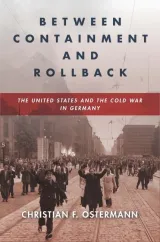
An international history of US foreign relations in the early years of the Cold War, this book reassesses the aims and influence of the American policies of 'containment' and 'rollback' in Soviet-backed communist East Germany, in light of newly declassified documents.
In the aftermath of World War II, American policymakers turned to the task of rebuilding Europe while keeping communism at bay. In Germany, formally divided since 1949,the United States prioritized the political, economic, and, eventually, military integration of the fledgling Federal Republic with the West. The extraordinary success story of forging this alliance has dominated our historical under-standing of the American-German relationship. Largely left out of the grand narrative of American–German relations were most East Germans who found themselves caught under Soviet and then communist control by the post-1945 geo-political fallout of the war that Nazi Germany had launched. They were the ones who most dearly paid the price for the country's division. This book writes the East Germans—both leadership and general populace—back into that history as objects of American policy and as historical agents in their own right
Based on recently declassified documents from American, Russian, and German archives, this book demonstrates that U.S. efforts from 1945 to 1953 went beyond building a prosperous democracy in western Germany and "containing" Soviet-Communist power to the east. Under the Truman and then the Eisenhower administrations, American policy also included efforts to undermine and "roll back" Soviet and German communist control in the eastern part of the country. This story sheds light on a dark-er side to the American Cold War in Germany: propaganda, covert operations, economic pressure, and psychological warfare. Christian F. Ostermann takes an international history approach, capturing Soviet and East German responses and actions, and drawing a rich and complex picture of the early East–West confrontation in the heart of Europe.
Content with summaries of each chapter/ Inhaltsverzeichnis mit Zusammenfassungen jedes Kapitels
Reviews / Rezensionen
"For a quarter century Christian Ostermann has been a leader in the effort to gain access to the archives of former communist countries. Now, employing a vast trove of East German and Russian documents, as well as those from Western governments, he offers us a vivid description and penetrating analysis of the struggle to shape the future of Germany after World War II. The book beautifully illuminates the complex interactions of military occupation officials, policymakers in Moscow, Washington, London, and Paris, and German actors in the eastern and western zones. Everyone interested in the early Cold War should read this volume."—Melvyn P. Leffler, University of Virginia
"Between Containment and Rollback is a model of outstanding historical research and argumentation. It is that rare work of scholarship that truly captures the contingency of events and circumstances leading to the division of Germany, as well as the different perspectives and motives which animated the United States and the Soviet Union. The description of the covert psychological campaign against East Germany illuminates both the potential and the very real limits of American power, with important lessons for contemporary foreign policy. A genuine tour de force!"—Thomas A. Schwartz, Vanderbilt University